
Why Cuban's warning matters
Cuban is not saying the labor market disappears tomorrow. His warning is about the business math: if AI can handle a task faster, cheaper and around the clock, companies will test it.
That puts pressure on roles built around predictable workflows, especially when the work is mostly moving information from one place to another, answering common questions or producing first-draft analysis.
The old entry-level bargain was simple: do routine work, learn the business, then move up. AI challenges that ladder because it can absorb many of the starter tasks that helped people get experience.
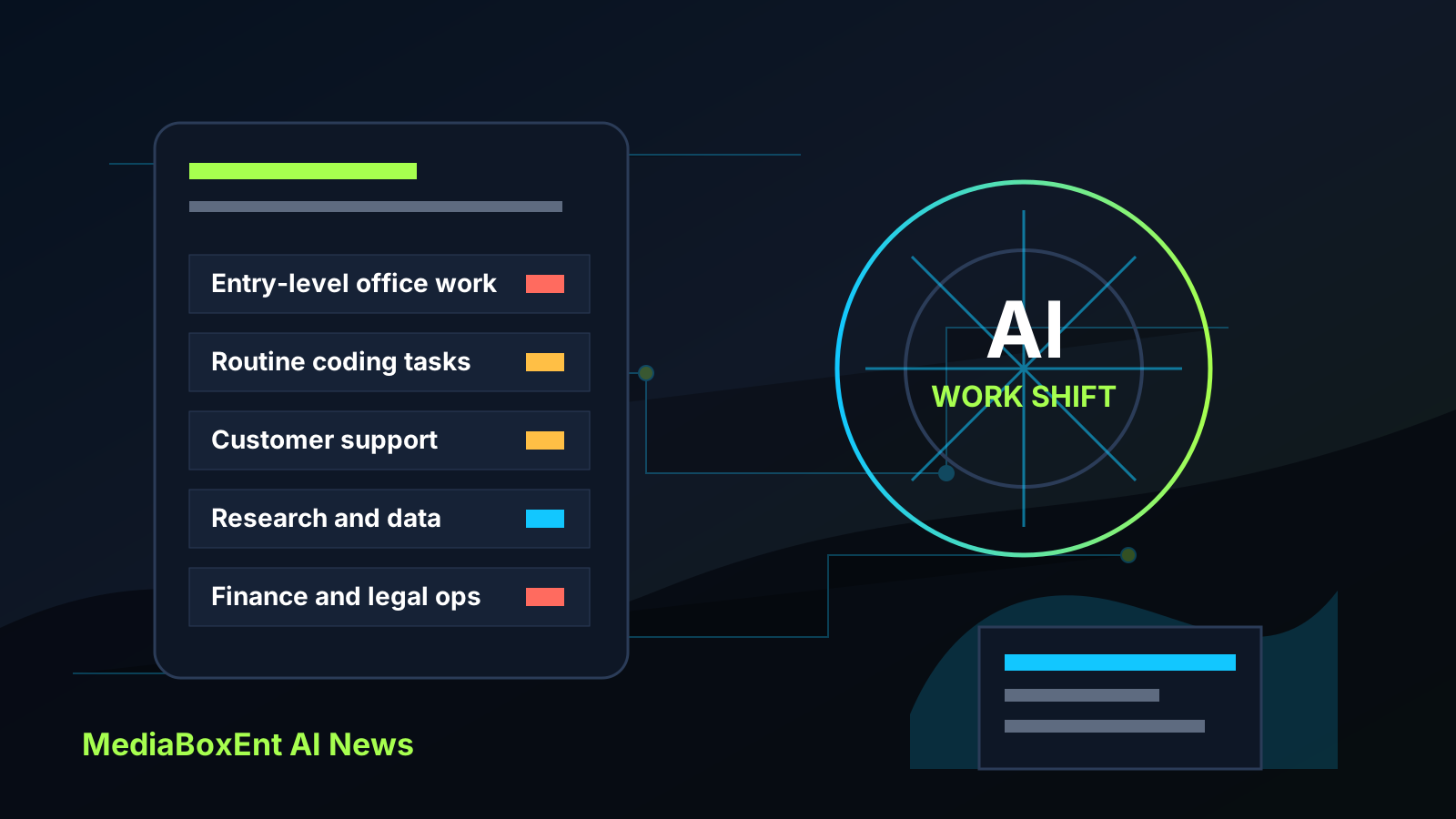
The five job categories Cuban says are exposed
Data entry, basic bookkeeping and other structured office tasks are easy targets because AI can process large batches of information with fewer delays.
AI coding tools can produce boilerplate, fix common bugs and speed up simple features. The value moves toward architecture, judgment and problem solving.
Chatbots and voice agents already answer basic questions. Human workers become more valuable when the situation is emotional, complex or high-risk.
AI can summarize documents, scan datasets and build reports. Analysts will need to question outputs, check assumptions and explain what the numbers actually mean.
Document review, compliance checks and basic accounting workflows are vulnerable when the process is repetitive and rules-based.
Why entry-level workers may feel it first
The biggest danger is not only job loss. It is fewer openings, slower hiring and thinner training pipelines for people trying to break into an industry.
If a company used to hire junior workers for repetitive tasks, it may now ask one experienced employee plus AI tools to do the same volume of work. That can make the first step into tech, finance, legal or office work harder to get.
Cuban's advice: learn AI, but do not outsource your brain
The useful move is not pretending AI does not exist. Workers need to understand where AI fits into their job, what it can speed up and where it can quietly make mistakes.
The strongest employees will use AI as leverage: draft faster, test ideas, summarize research and automate repetitive steps while still owning the final judgment.
MediaBoxEnt take
AI is not a magic worker replacement. It is a pressure test. If your job is mostly copy, paste, summarize and repeat, the risk is real. If your work depends on context, taste, trust, people skills and consequence-aware decisions, you still have room to build an edge.
The practical answer is to become the person who knows how to use AI and also knows when not to trust it. That combination is going to matter more than simply being fast at a routine task.
Sources and context
The Hill / NewsNation report by Damita Menezes, published May 1, 2026 at 2:48 PM ET
Mark Cuban public comments and social posts referenced in the report
MediaBoxEnt rewrote and analyzed the report in original wording for context, SEO and reader clarity.
FAQ
Is AI going to eliminate all of these jobs?
No. The more likely short-term impact is fewer routine openings, smaller teams and more pressure on workers to handle higher-value tasks.
Which workers are safest?
People who combine domain knowledge with judgment, communication and AI fluency are better positioned than workers who only perform repeatable steps.
What should a student or jobseeker learn first?
Learn the core skill of the field first, then use AI to practice, automate small tasks and understand where the tool fails.